An innocuous pass was played out of defence into the feet of a diminutive figure in Real Betis green, it arrived on the half turn, around 50 yards from the Levante goal. Nabil Fekir took a touch out of his feet and turned, accelerating into a pocket of space, two more touches and he was beyond the left midfielder. As he hesitated about 30 yards from goal, the conventional option would have been Emerson as an outlet but the hesitation drew in the Levante left back. Drifting laterally onto his left foot he moved away from the stranded defender, now pulling the left sided centre back towards him, giving him just enough time to slide the ball back inside, bearing down on the goalkeeper to calmly finish through his legs.
This goal, reminiscent of a certain other drifting left footed forward, was the catalyst to an eighth Betis win in eleven games, in a match that did not deserve such a moment.
It was the sort of moment that Fekir’s game and personality is suited to however. The ability to take the ball on the half-turn and twist in possession in tight spaces, is an invaluable commodity in close matches.
In tetchy fixtures with little space to operate, with hard pressing, players with a low centre of gravity and the ability to turn with the ball under close control can really break opposing teams open.
Some players seem to benefit more from receiving the ball in little space, with defenders tight to them, Iniesta was perhaps the best at operating in midfield with barely any room to manoeuvre. Fekir is at times more dangerous with players tight to him, he is in the 93rd percentile for passes under pressure in Europe’s top five leagues but this doesn’t necessarily tell the whole story as generally his passes come after turning a defender and breaking into space.
Fekir can pick a pass but his stats are fairly unremarkable, it is dribbling where he comes into his own in terms of creation. When it comes to dribbles leading to a shooting opportunity, Fekir is in the 98th percentile among similar players in men’s European top five leagues, he is in the same percentile for shots created from being fouled.
The threat of having such a skilful player with such a low centre of gravity and willingness to turn quickly in transition is that you can’t get too tight to them for fear that they will be able to shift the ball and move on leaving you either stranded or in no position to avoid bringing them down.
Players like Fekir are notable given their ability to be invaluable to a midfield unit with few skills that specifically stand out. Fekir in most seasons has decent goal and assist tallies but they don’t always leap out, similarly he is unlikely to be found pinging sixty yard switches or controlling the tempo from the middle. Affecting the pace of the game by popping up all over the pitch and creating space for others with close control and a quick turn can be just as important as any of the aforementioned.
It is also worth noting that the categories in which Fekir features in the high nineties percentile wise are skewed slightly by being led almost exclusively by Lionel Messi. It is a fairly thankless task to measure someone’s playmaking worth in tight spaces on the turn when compared with the best player probably ever at each skill.
Overall it is a sign of how ridiculously strong the French national team is that Nabil Fekir does not break into their strongest eleven but if they are ever struggling for a bit of creativity in the face of strong pressing or man marking, they could do worse than turn to one of La Liga’s most underrated playmakers.
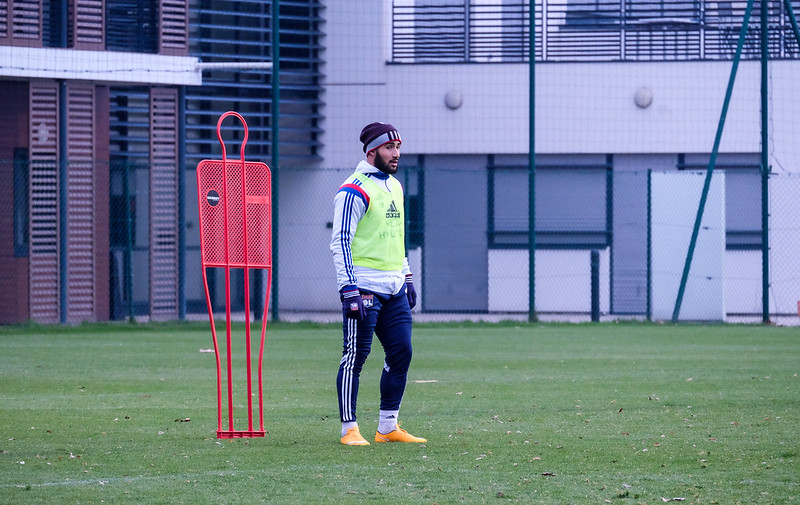
Photo credit: Thomas Fabre on flickr, creative commons 2.0 https://creativecommons.org/licenses/by/2.0/legalcode
 Michael Vince on Sport